Paediatric Vitreoretinal Surgery London | Mr Robert Henderson | GOSH

Paediatric Vitreoretinal Conditions

Written by Mr Robert Henderson BSc MBBS MD FRCOphth · Consultant Vitreoretinal Surgeon, Moorfields Eye Hospital & Great Ormond Street Hospital · Clinical Lead for Ophthalmology, GOSH

Retinal and vitreous conditions in children are among the most challenging in all of ophthalmology. They are rare, often complex, frequently associated with underlying systemic or genetic conditions, and carry profound implications for a child’s visual development, education, and quality of life. Very few surgeons in the United Kingdom dedicate a significant part of their practice to paediatric vitreoretinal surgery — it is a field that demands not only advanced surgical skill but deep familiarity with the distinctive anatomy, biology, and behaviour of the child’s eye. As Clinical Lead for Ophthalmology at Great Ormond Street Hospital, this work sits at the heart of what I do.
Referrals welcome from across the UK and internationally. Families and clinicians seeking assessment for a child with a complex retinal condition are welcome to contact my secretary directly. Many of my paediatric patients are referred from other centres across the United Kingdom and from abroad. I work closely with the multidisciplinary teams at GOSH to ensure every child receives coordinated, expert care.

Why Paediatric Vitreoretinal Surgery is Different

The eye of a child is not simply a smaller version of an adult eye. The vitreous gel in a young eye is dense, adherent, and behaves very differently under surgical manipulation than the liquefied vitreous of an older patient. The retina is more elastic, the sclera more pliable, and the eye continues to grow throughout childhood — all of which influence surgical planning and long-term outcomes. Many paediatric retinal conditions are also bilateral, progressive, and genetically determined, requiring a holistic approach that extends well beyond the operating theatre.

General anaesthesia is required for all children undergoing retinal examination under anaesthesia (EUA) or surgery, and all procedures are performed at Great Ormond Street Hospital, where world-class paediatric anaesthetic, nursing, and multidisciplinary support surrounds every case.

Conditions

Coats Disease

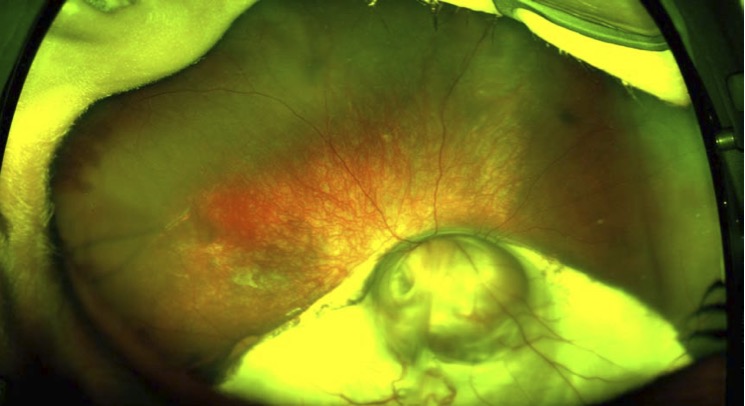
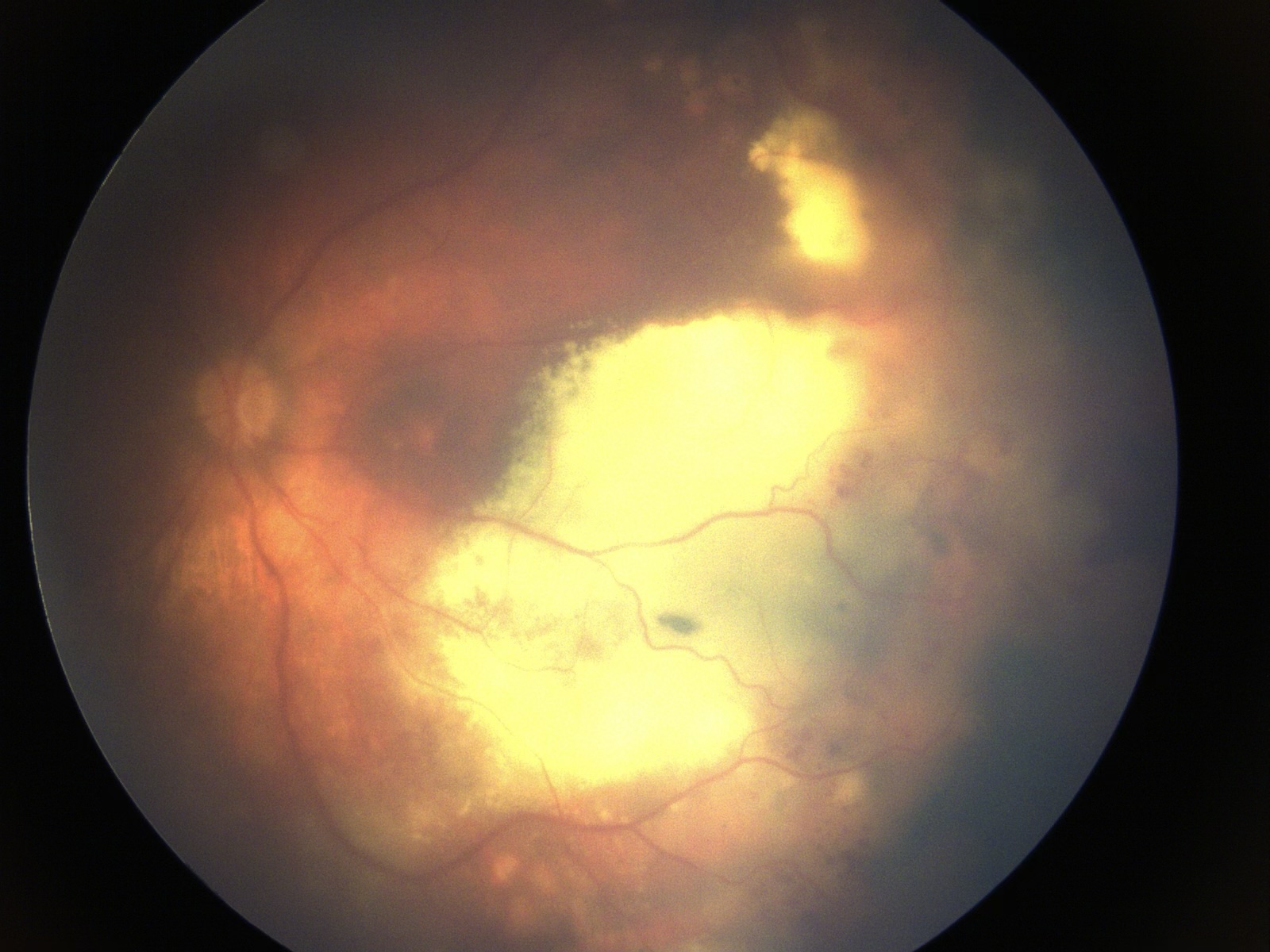
Coats disease is a rare, non-hereditary condition affecting the retinal blood vessels. Approximately two thirds of cases occur in boys, and around two thirds of children present before the age of 10 — though the condition can manifest in very young children, even infants. When it presents in infancy with a white pupil (leukocoria), it is frequently and understandably confused with retinoblastoma, and many children are initially seen within the retinoblastoma service before the diagnosis of Coats disease is established. Abnormally formed retinal blood vessels leak fluid and lipid into and beneath the retina, causing progressive accumulation of exudate, retinal thickening, and — if untreated — total exudative retinal detachment and permanent blindness in the affected eye.

The condition varies enormously in severity, from a few peripheral telangiectatic vessels with minimal exudation to catastrophic total detachment presenting as a white pupil (leukocoria). Early diagnosis is critical: the earlier treatment begins, the greater the chance of preserving vision and the eye itself.

I see a high volume of children with Coats disease, including many referred from other centres across the UK where specialist expertise is limited. The management of Coats disease requires individualised treatment at every stage, guided by the severity of the disease and the response to treatment.

Staging and Treatment

Stage Features Treatment Approach
Stage 1 Retinal telangiectasia only; no exudation Laser photocoagulation to abnormal aneurysms and telangiectasia; laser to all non-perfused retina
Stage 2 Telangiectasia with exudation — extrafoveal (2A) or foveal (2B) Laser to abnormal vessels and non-perfused retina; anti-VEGF as adjunct; RetCam-guided fluorescein angiography to map treatment
Stage 3 Exudative retinal detachment — subtotal (3A) or total (3B) Laser-first to detached and attached retina; external drainage if detachment precludes safe laser access; anti-VEGF adjunct; vitrectomy rarely required
Stage 4 Total detachment with secondary glaucoma Surgery to save the eye where possible; management of raised pressure
Stage 5 End-stage — phthisis (blind, shrunken eye) Comfort and cosmetic management

The cornerstone of treatment at every stage — including in the presence of retinal detachment — is laser photocoagulation , applied directly to the abnormal aneurysms and telangiectatic vessels, and to all areas of non-perfused retina. The goal is to ablate the diseased vasculature and eliminate the leakage driving exudation. Intravitreal anti-VEGF injection is used as an adjunct in selected cases to accelerate the resolution of exudation, but laser remains the primary treatment. In Stage 2B disease — where foveal exudation is threatened — I have a particular interest in faricimab, a dual-acting agent that blocks both VEGF-A and Angiopoietin-2. The anti-Ang-2 component targets vascular instability through a complementary pathway to VEGF blockade alone, and I believe this dual mechanism may be especially relevant in managing the abnormal vasculature of advanced Stage 2 Coats disease — an area in which I am currently developing a published series.

Cryotherapy is deliberately avoided in my practice. Although it has been used historically in Coats disease, cryotherapy causes a significant increase in exudation and — critically — promotes contraction of the hyaloid face, which introduces a tractional element to what is fundamentally an exudative disease. This can substantially worsen the situation and is a complication best avoided from the outset.

All treatment is delivered under general anaesthesia. The assessment and treatment pathway typically begins with a formal examination under anaesthesia (EUA) , during which wide-field fluorescein angiography is performed using the RetCam imaging system. This provides a detailed map of the abnormal vasculature, the extent of non-perfusion, and the distribution of exudation — information that guides precise laser treatment delivered in the same sitting.

Multiple treatment sessions are usually required, particularly in more advanced disease, and long-term follow-up is essential as the condition can reactivate. Each follow-up EUA allows reassessment of the vasculature and further laser treatment to any residual or recurrent abnormality.

Managing Retinal Detachment in Coats Disease

When exudative detachment has occurred, the principle of laser-first is maintained wherever possible. Laser can be applied safely to detached retina, and in many cases progressive resolution of subretinal fluid follows successful ablation of the underlying abnormal vessels. Vitrectomy is very rarely required and is generally avoided. Coats disease is fundamentally an exudative condition — there is no vitreous traction driving the detachment — and vitrectomy therefore adds little to the treatment of the underlying problem. As noted above, surgical intervention also risks introducing a tractional element where none existed.

The most challenging situation arises when extensive detachment has pushed the retina up behind the lens, making safe laser application impossible without risking lens damage. In these cases I perform external drainage of the subretinal fluid — a limited conjunctival peritomy and controlled cut-down with an anterior chamber maintainer to lower intraocular pressure and allow the retina to fall back sufficiently to create the working space needed to deliver laser safely. This avoids formal vitrectomy while achieving the necessary anatomical access.

In the rare circumstance of a fundus-obscuring cataract, a limited vitrectomy with endolaser may occasionally be required — but this is the exception rather than the rule.

A critical principle in managing Coats disease is that foveal exudate is disastrous for central vision — once lipid has accumulated beneath the fovea, the damage to central vision is largely irreversible. This is why treatment is pursued so vigorously even in eyes with relatively good vision: the aim is to eliminate the abnormal vasculature before exudate reaches the centre. Once the retina has detached in Coats disease, there is very little vision left to save. At that stage the goal shifts — not to restoring useful vision, which is rarely achievable — but to preserving a comfortable, cosmetically acceptable eye that will remain with the child throughout their life.

It is also essential to understand that Coats disease is a lifelong condition . Even after apparently successful treatment and complete quiescence of the disease, reactivation can occur — sometimes years or decades later. This mirrors the behaviour seen in FEVR. Long-term monitoring is therefore not optional — it is a necessary part of the management of every child with Coats disease, and families should be counselled clearly on this from the outset.

Familial Exudative Vitreoretinopathy (FEVR)

FEVR is an inherited disorder of retinal vascular development in which the peripheral retina fails to vascularise normally, leading to a spectrum of complications that closely resembles — and is frequently confused with — retinopathy of prematurity, even in full-term babies. It is caused by mutations in several genes involved in the Wnt signalling pathway, including FZD4 , LRP5 , TSPAN12 , and NDP (Norrie disease), and is inherited in autosomal dominant, autosomal recessive, or X-linked patterns depending on the gene involved.

The severity of FEVR varies enormously — even within the same family and carrying the same mutation. Some affected individuals have only subtle peripheral retinal changes that never cause symptoms, while others develop tractional or combined tractional-rhegmatogenous retinal detachment in infancy or early childhood that threatens sight.

Management requires careful staging with wide-field retinal imaging and fluorescein angiography to assess the extent of peripheral avascularity and any associated neovascularisation. Peripheral laser ablation is used to treat avascular retina and reduce the stimulus for neovascularisation. When traction or detachment has developed, vitreoretinal surgery is required — and these are among the most technically challenging retinal detachments encountered in paediatric practice, given the dense adherent vitreous, the fragile retina, and the often complex configuration of the detachment. Genetic testing and family screening are an important part of the management pathway.

Stickler Syndrome

Stickler syndrome is the most common inherited cause of retinal detachment in childhood. It is an autosomal dominant connective tissue disorder caused most commonly by mutations in the COL2A1 gene, affecting collagen throughout the body and producing a characteristic combination of ocular, orofacial, auditory, and joint features.

The ocular manifestations are often the most clinically significant. COL2A1-associated Stickler syndrome — the most common subtype — produces a characteristic membranous vitreous phenotype, in which abnormal vitreous architecture is visible on slit-lamp examination as a dense membrane behind the lens rather than the normal gel filling the vitreous cavity. This abnormal vitreous is strongly associated with giant retinal tears, which can lead to complex, rapidly progressive retinal detachment. Bilateral detachment is reported in up to 40% of cases in some series, making this the highest-risk inherited condition for paediatric giant retinal tear in clinical practice.

Prophylactic management is a central part of caring for children with Stickler syndrome. I work closely with the National Stickler Syndrome Service in Cambridge , which identifies and screens affected families and performs prophylactic cryopexy to reduce the risk of detachment. Many patients are managed jointly — with prophylaxis delivered through the national service and acute surgical management, when detachment occurs despite prophylaxis, referred to my practice. These are among the most technically demanding retinal detachments encountered in paediatric surgery, given the giant tear configuration, the abnormal adherent vitreous, and the frequent need for complex tamponade strategies. Genetic diagnosis and family screening are essential, as Stickler syndrome follows autosomal dominant inheritance and first-degree relatives carry a 50% risk of the condition.

Paediatric Rhegmatogenous Retinal Detachment

Rhegmatogenous retinal detachment — caused by a tear or break in the retina through which fluid passes to lift the retina from the eye wall — is uncommon in children but carries a disproportionate impact given the decades of vision at stake. In contrast to adult detachments, paediatric rhegmatogenous detachments are more frequently associated with an underlying predisposing condition (such as Stickler syndrome, high myopia, or previous ocular surgery or trauma), present at a more advanced stage due to the difficulty of detecting symptoms in young children, and are associated with a higher rate of proliferative vitreoretinopathy (PVR) — the scar tissue formation that is the principal cause of surgical failure.

The dense, adherent vitreous of the young eye makes surgical dissection more demanding, and the risk of iatrogenic retinal breaks during vitrectomy is higher than in adult surgery. Despite these challenges, anatomical reattachment is achievable in the majority of cases with appropriate surgical expertise, and every effort is made to give the child the best possible visual outcome.

It is important to note that while I manage rhegmatogenous retinal detachment in children — including late-onset detachments in patients with a history of retinopathy of prematurity (ROP) — acute surgical treatment of active ROP is not part of my current practice. Families and referrers seeking management of ROP-related complications in older children are welcome to make contact.

Inherited Retinal Dystrophies and Retinal Gene Therapy

Inherited retinal dystrophies (IRDs) are a group of genetically determined conditions in which progressive degeneration of the photoreceptors or retinal pigment epithelium leads to gradual — and often severe — visual loss. They include conditions such as retinitis pigmentosa, Leber congenital amaurosis (LCA), choroideraemia, Best disease, and Stargardt disease, among many others. Collectively they represent the most common cause of severe visual impairment in the working-age population in the developed world.

The emergence of gene therapy has transformed the outlook for some of these conditions. Voretigene neparvovec (Luxturna) — the first approved retinal gene therapy — is now available for patients with biallelic RPE65 mutation-associated retinal dystrophy, including RPE65-associated LCA, and is delivered by subretinal injection under the retina during vitrectomy surgery. This requires the same specialist vitreoretinal surgical skills used in retinal detachment repair, but with the added precision demanded by delivering a tiny volume of therapeutic vector beneath the fragile fovea.

At Great Ormond Street Hospital, I am involved in the assessment and surgical management of children with inherited retinal conditions, working within a multidisciplinary team that includes clinical geneticists, genetic counsellors, and low vision specialists. As the genetics of inherited retinal disease becomes increasingly understood and the pipeline of gene therapy trials continues to expand, the intersection of vitreoretinal surgery and molecular medicine represents one of the most exciting frontiers in ophthalmology — and one in which GOSH is at the forefront.

Families seeking assessment for a child with a suspected or confirmed inherited retinal dystrophy, or wishing to discuss eligibility for gene therapy or clinical trials, are welcome to make contact.

Referring a Child

Paediatric vitreoretinal conditions are rare, and many district general hospitals and even regional eye units will see only a handful of cases in a year. If you are a clinician with a child under your care who has a complex retinal condition — or a parent who has been told that your child needs specialist assessment — please do not hesitate to get in touch. Urgent cases are accommodated as a priority.

All paediatric surgery and surgical examination under anaesthesia is performed at Great Ormond Street Hospital for Children , London, within the full infrastructure of a world-class children’s hospital.

Book an Assessment

To refer a child or discuss a paediatric retinal condition, please contact my secretary Alison Anscombe:

📞 +44 7974 015691  |  📧 [email protected]

Or use the contact form on this website .

Referrals accepted from consultants, GPs, optometrists, and directly from families. Urgent cases accommodated promptly.

Mr Robert Henderson BSc MBBS MD FRCOphth is a Consultant Vitreoretinal Surgeon at Moorfields Eye Hospital and Great Ormond Street Hospital, and Clinical Lead for Ophthalmology at GOSH