Macular Hole
What is the Macula?
The macula is a small, specialised region at the centre of the retina, approximately 5mm in diameter. It contains the highest density of cone photoreceptors in the eye and is responsible for everything we rely on most — reading, recognising faces, watching television, and any activity requiring fine detail. When something goes wrong at the macula, the impact on vision is immediate and often distressing.
What is a Macular Hole?
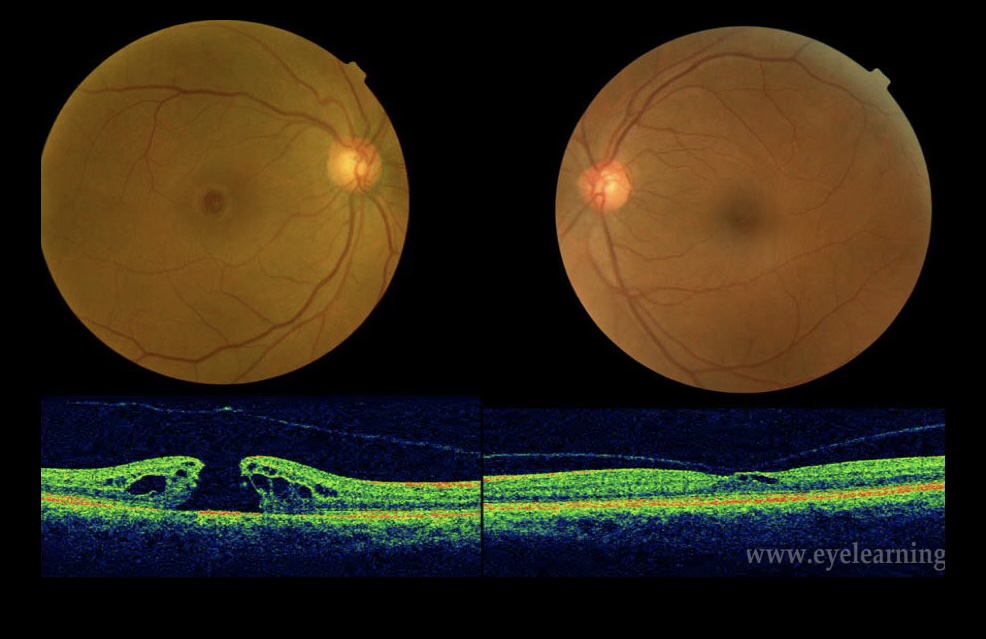
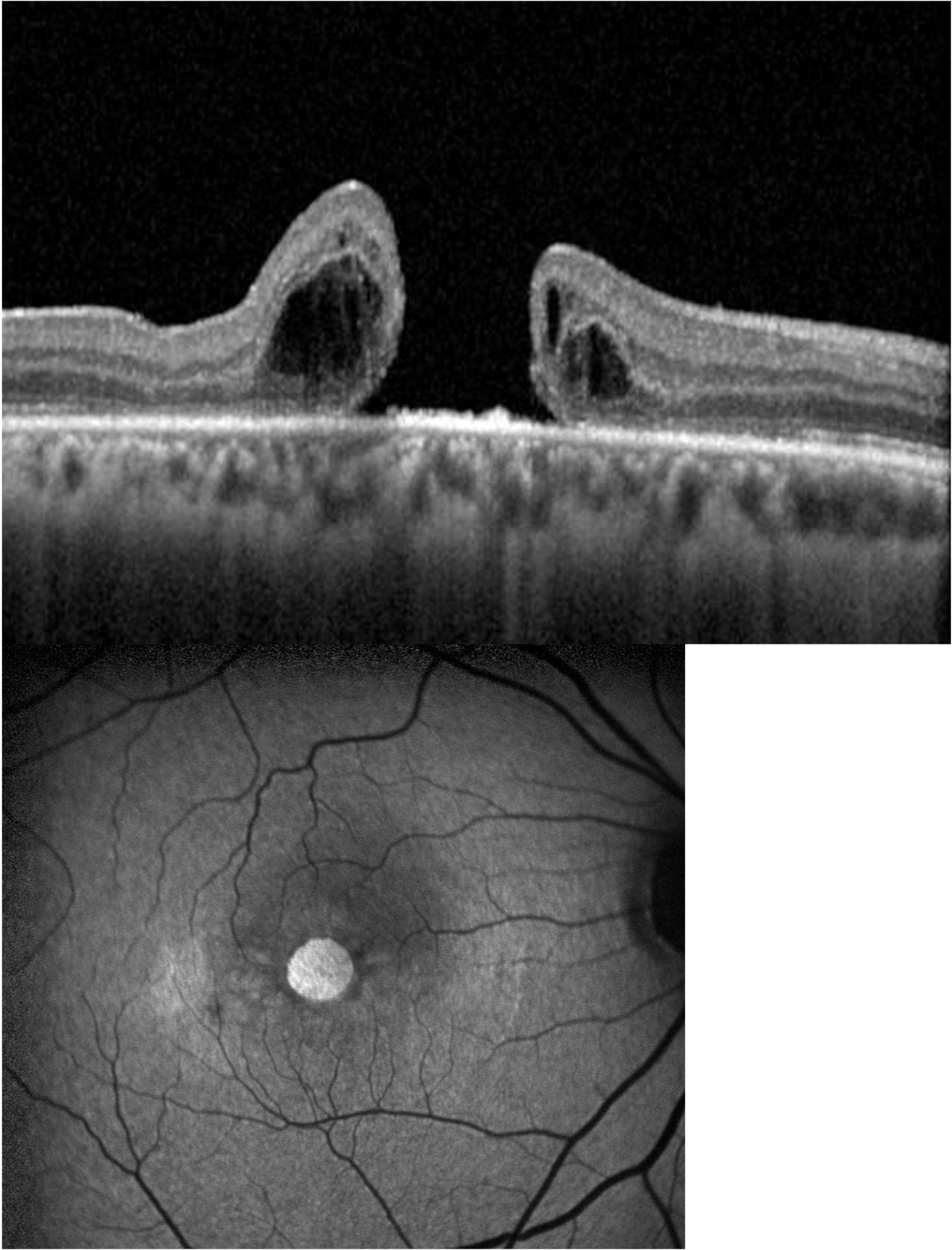
A macular hole is a full-thickness defect through all layers of the retina at the very centre of the macula — a region called the fovea. It arises when the vitreous gel that fills the eye pulls away from the retinal surface in an abnormal way, exerting traction on the delicate foveal tissue and eventually tearing through it.
Macular holes most commonly occur in people over the age of 60 and are more common in women. In the majority of cases there is no identifiable underlying cause — they arise spontaneously as part of the normal ageing process of the vitreous. Less commonly, macular holes can develop following trauma, severe myopia (short-sightedness), or other retinal conditions.
Symptoms
The symptoms of a macular hole are characteristic and tend to develop gradually:
- A grey, blurred, or distorted area in the centre of vision
- Straight lines appearing bent or wavy (metamorphopsia)
- A central blank spot or scotoma
- Difficulty reading, even with glasses
- Colours appearing washed out in the central field
Peripheral vision is not affected — patients can usually navigate around the environment normally but find detailed tasks increasingly difficult. The condition affects one eye at a time, and patients often first notice the problem when they inadvertently cover their good eye.
Stages of Macular Hole
Macular holes are classified by size, which has important implications for treatment planning and surgical outcomes:
| Classification | Size | Gas Used | Gas Duration |
|---|---|---|---|
| Small | Under 400 microns | SF6 | Approximately 3 weeks |
| Medium | 400–600 microns | C2F6 | Approximately 6 weeks |
| Large | Over 600 microns | C3F8 | 8–10 weeks |
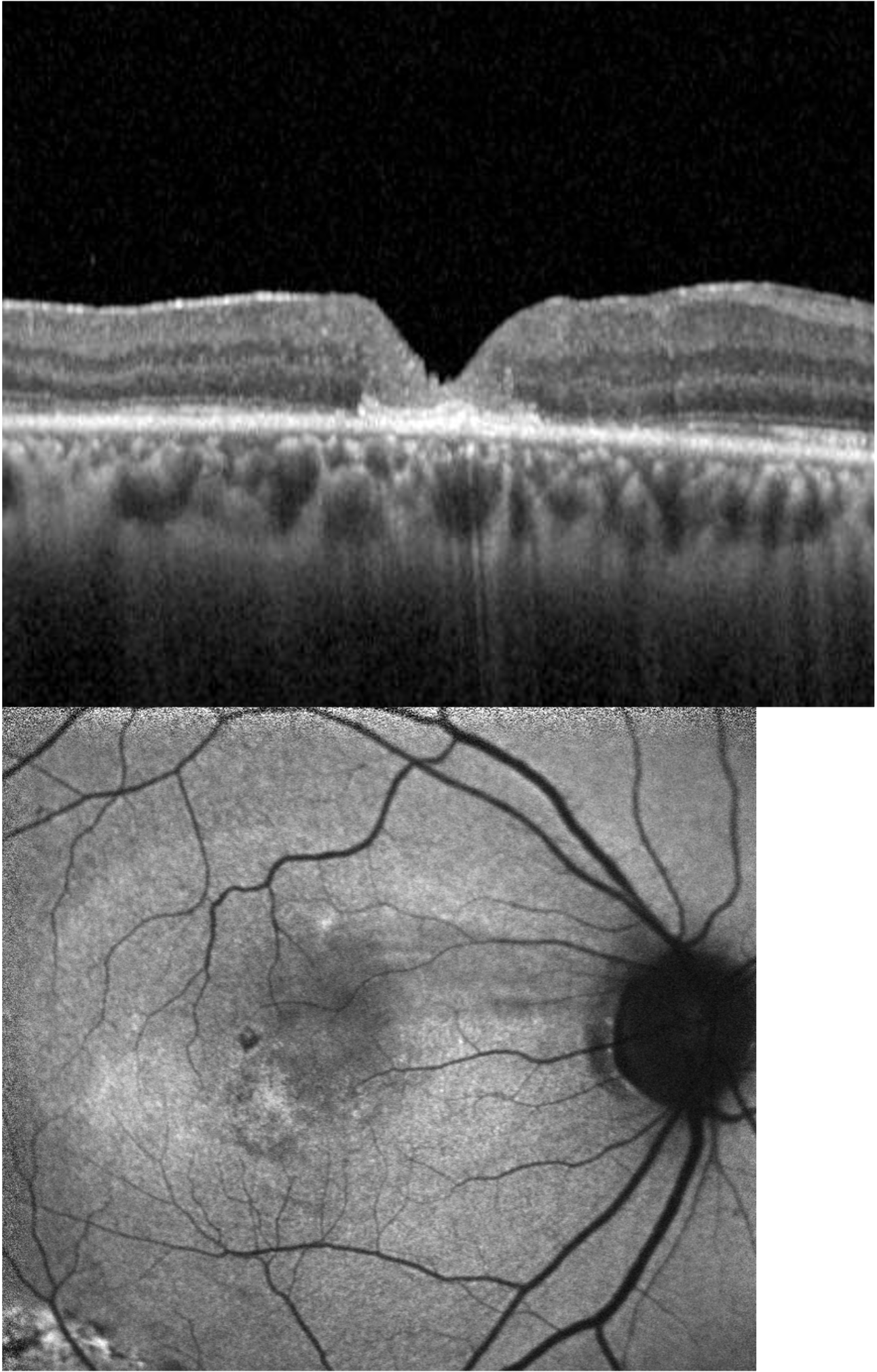
Size is measured using optical coherence tomography (OCT), which provides precise cross-sectional imaging of the retina and remains the cornerstone of diagnosis and surgical planning.
Diagnosis
At your consultation I will assess your vision and perform detailed retinal examination. The diagnosis is confirmed with OCT scanning, which reveals the hole’s size, shape, and the condition of the surrounding retinal tissue. OCT also allows me to assess for any residual vitreomacular traction — abnormal adhesion between the vitreous and macula — which influences surgical planning.
In the very earliest stages, before a full-thickness hole has formed, a condition called vitreomacular traction syndrome (VMT) may be present. In some cases this can resolve spontaneously. Once a full-thickness hole is established, surgery is the only effective treatment.
Surgery for Macular Hole
The Operation
Macular hole surgery is performed as a day case under local anaesthesia with sedation. General anaesthesia is available for patients in whom local anaesthesia is not suitable. Through three 25-gauge ports in the white of the eye, I remove the vitreous gel and peel the internal limiting membrane (ILM) — a thin transparent layer on the retinal surface — from around the hole. This ILM peel is a critical step: by removing this layer, the retina is freed from tangential traction and the edges of the hole are able to relax, come together, and seal. The eye is then filled with a gas bubble which sits against the closed hole, blocking it and maintaining the dry environment needed for the retinal edges to seal together.
The procedure typically takes 30 to 40 minutes. Closure rates with modern surgical technique exceed 90% for primary macular holes, and are even higher for smaller holes.
Gas Tamponade and Positioning
The gas used is selected based on hole size, as described in the table above. For large macular holes, face-down positioning for a period after surgery helps the gas bubble press directly against the hole and may improve closure rates. For smaller holes, strict face-down posturing is less critical — the more important principle is to keep reasonably still and avoid activities that generate significant fluid currents within the eye, which could displace the gas and prevent the hole from sealing. You will be given clear, written instructions tailored to your specific situation.
Recovery and Visual Outcomes
The timeline of visual recovery depends largely on the size of the hole and the gas used. During the period when the gas bubble occupies most of the visual field, vision will be very limited — this is entirely expected. As the bubble gradually reduces, vision improves from the periphery inwards. Most patients find that once the gas has gone past the halfway point, useful vision returns to the central field.
For small holes treated with SF6, many patients notice meaningful improvement by 10–14 days. For larger holes requiring C3F8, the process is more gradual and it may be 10–12 weeks before a full assessment of the visual outcome is possible. Improvement can continue slowly for up to 12 months as the retinal architecture continues to remodel.
Overall, approximately 90% of patients experience improvement in visual acuity following successful macular hole closure. On average, patients gain around two lines of visual acuity on the chart, though greater improvement is possible — particularly when the hole is treated promptly before significant photoreceptor damage has occurred. The final outcome depends on hole size, duration, and the condition of the underlying retinal tissue.
What if the Hole Does Not Close?
In approximately 5–10% of cases, the hole does not close with the first operation. In this situation, further surgery can be highly effective. For large or recalcitrant holes, I perform an ILM flap technique — in which a small portion of the peeled internal limiting membrane is folded over and placed within the hole to act as a scaffold for closure. For the most challenging cases where other techniques have been unsuccessful, I use dried amniotic membrane placed beneath the hole. This is a technique I have used successfully for a number of years, and in holes that have resisted all other approaches, it achieves closure in nearly every case. The approach is always tailored to the individual patient and the specific characteristics of the hole.
Risks of Surgery
- Cataract — very common in patients who retain their natural lens; typically develops within one to two years and is readily treated
- Retinal detachment — uncommon; occurs in approximately 1–2% of cases
- Infection (endophthalmitis) — rare but serious
- Failure of the hole to close — in approximately 5–10% of primary cases
- Raised intraocular pressure — the gas bubble can cause a temporary rise in eye pressure, which may require treatment with drops; in rare cases this can lead to glaucoma-related damage if not managed promptly
- Visual field defect — a small arcuate scotoma may occasionally follow ILM peeling, though this is rarely symptomatic
Private Macular Hole Surgery in London
Private macular hole surgery is currently performed at Moorfields Eye Hospital . From September 2026, adult vitreoretinal surgery including macular hole repair will be available at 1 Welbeck, Marylebone , which will become the principal centre for my private practice.
If you have been diagnosed with a macular hole, or if you are experiencing the symptoms described above, I would encourage you to seek assessment promptly. Macular holes do not resolve without treatment, and earlier surgery is associated with better visual outcomes.
Book a Consultation
To discuss macular hole surgery or arrange an urgent assessment, please contact my secretary Alison Anscombe:
📞 +44 7974 015691 | 📧 [email protected]
Or use the contact form on this website .
Mr Robert Henderson BSc MBBS MD FRCOphth is a Consultant Vitreoretinal Surgeon at Moorfields Eye Hospital and Great Ormond Street Hospital, and Clinical Lead for Ophthalmology at GOSH