Inherited Retinal Disease in Children | Mr Robert Henderson | GOSH & Moorfields

Inherited Retinal Dystrophies in Children

Written by Mr Robert Henderson BSc MBBS MD FRCOphth MD · Consultant Vitreoretinal Surgeon, Moorfields Eye Hospital & GOSH · Clinical Lead for Ophthalmology, GOSH · Honorary Associate Professor, UCL–GOSH Institute of Child Health

Inherited retinal dystrophies (IRDs) are a group of genetically determined conditions in which progressive degeneration of the photoreceptors or retinal pigment epithelium leads to visual impairment — often from early childhood, and sometimes from birth. They are rare individually but collectively represent the most common cause of severe visual impairment in children and working-age adults in the developed world. We are living through a pivotal moment in the history of these diseases: gene therapy has moved from laboratory to clinic, and children who would previously have faced inevitable and irreversible blindness can now be treated. I have been involved in this field since its earliest clinical stages and lead one of the most active paediatric IRD programmes in the United Kingdom.
The GOSH Inherited Retinal Disease Service. I lead the paediatric inherited retinal disease service at Great Ormond Street Hospital, with close working relationships with colleagues at Moorfields Eye Hospital — including a monthly IRD genetics MDT attended by MEH clinicians, and a coordinated pathway for patients transitioning to adult care at Moorfields. I am responsible for the highly specialised commissioned programme for Luxturna (voretigene neparvovec) gene therapy at GOSH, treating all children under 10 referred for RPE65-associated retinal dystrophy. Referrals are welcomed from across the UK and internationally.

My Background in This Field

My involvement in inherited retinal disease spans more than two decades, beginning during my research MD when I was an active participant in the first ever clinical retinal gene therapy trial — the Bainbridge et al. study published in the New England Journal of Medicine in 2008, which demonstrated for the first time that gene therapy could improve visual function in humans with RPE65-associated Leber congenital amaurosis. Being part of that landmark work at its inception shaped the direction of my clinical and research career.

I subsequently established Moorfields as a treatment site for adult Luxturna therapy and Great Ormond Street Hospital as the paediatric centre, and I have since built one of the most comprehensive paediatric IRD programmes in the UK — encompassing diagnosis, electrophysiological assessment, genetic counselling, multi-disciplinary care, and active participation in multiple gene therapy and enzyme replacement clinical trials across a range of conditions.

Alongside my clinical work, I hold an Honorary Associate Professorship at the UCL–GOSH Institute of Child Health, where my research collaborations with basic science and clinical colleagues span inherited retinal disease, novel therapeutic approaches, and the development of new outcome measures for use in clinical trials. I have over 68 peer-reviewed publications in this and related fields.

The Dual Sensory Clinic — Usher Syndrome and Beyond

Many inherited retinal conditions are associated with hearing loss or other systemic features — most notably Usher syndrome, in which retinitis pigmentosa is combined with sensorineural hearing loss and, in some subtypes, vestibular dysfunction. Managing these patients well requires far more than an ophthalmology appointment: it demands coordinated input from audiology, audiovestibular medicine, clinical genetics, low vision services, and education specialists, ideally in a single setting.

At Great Ormond Street Hospital, I have established the UK’s only dedicated Dual Sensory Clinic for children with Usher syndrome and other conditions combining retinal and auditory impairment. The clinic brings together audiovestibular physicians and clinical geneticists alongside ophthalmology at every MDT meeting, ensuring that every new referral is discussed comprehensively and that no aspect of a child’s sensory needs is overlooked. For families navigating a diagnosis that affects both sight and hearing, having all the relevant expertise in one place makes an enormous difference.

Conditions

Leber Congenital Amaurosis (LCA) and Early-Onset Severe Retinal Dystrophy

LCA is the most severe inherited retinal dystrophy of childhood, presenting at birth or in the first months of life with profound visual impairment, nystagmus, and absent or severely reduced electroretinogram responses. It is genetically heterogeneous — caused by mutations in more than 25 genes — and the specific gene involved has important implications for prognosis, management, and eligibility for treatment.

The most significant advance in the entire field of inherited retinal disease has been the approval of voretigene neparvovec (Luxturna) for the treatment of RPE65 -associated LCA and early-onset severe retinal dystrophy — the first approved in vivo gene therapy for an inherited disease. Delivered by subretinal injection during vitrectomy surgery, Luxturna replaces the defective RPE65 gene and restores the visual cycle in the retinal pigment epithelium, producing meaningful and durable improvements in visual function in the majority of treated patients.

I am responsible for the GOSH component of the MEH–GOSH highly specialised commissioned Luxturna service, treating all children under 10 referred to this combined programme. Our published outcomes data — including results reported in JAMA Ophthalmology (2026) — demonstrate the real-world effectiveness of this treatment in a paediatric population.

Retinitis Pigmentosa

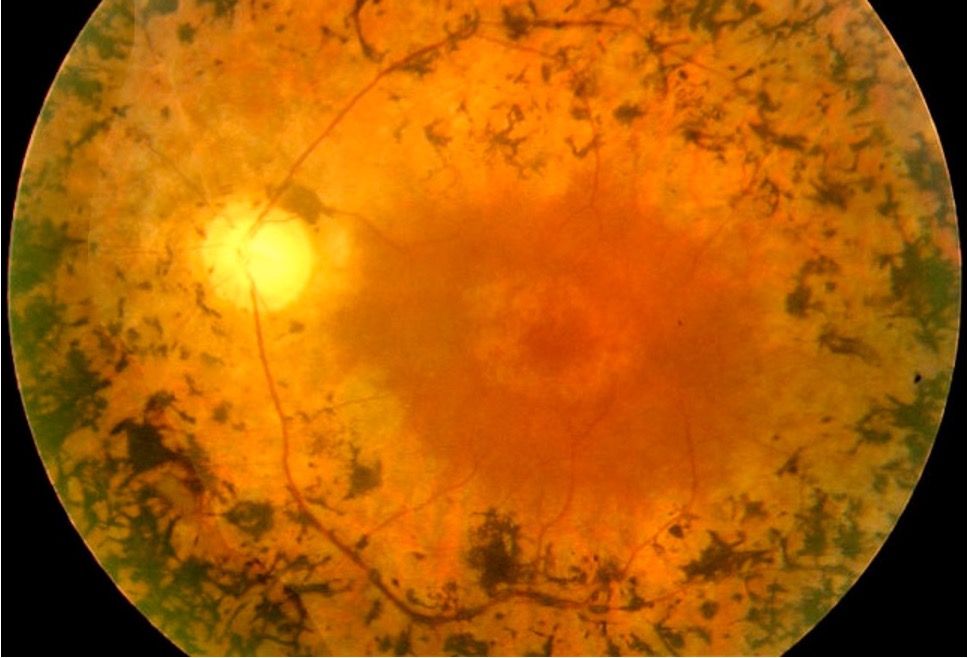
Retinitis pigmentosa (RP) is the most common inherited retinal dystrophy, affecting approximately 1 in 4,000 people. It is characterised by progressive loss of rod photoreceptors — producing night blindness and constriction of the peripheral visual field — followed by cone involvement and eventual loss of central vision. It is caused by mutations in over 80 genes and can be inherited in autosomal dominant, autosomal recessive, or X-linked patterns.

X-linked RP, caused most commonly by mutations in the RPGR gene, is the most severe subtype and disproportionately affects males. I was the named vitreoretinal surgeon for the BEACON Therapeutics RPGR Phase 3 trial at Moorfields Eye Hospital — one of the most advanced gene therapy programmes for X-linked RP currently in clinical development.

For the majority of RP patients, no approved treatment currently exists that halts or reverses the disease. Management focuses on accurate diagnosis — including comprehensive electroretinography, genetic testing, and detailed imaging — genetic counselling for the family, optimisation of remaining vision, and ensuring patients are aware of and appropriately considered for clinical trials as they become available.

Achromatopsia

Achromatopsia is a congenital, stationary cone dystrophy in which cone photoreceptors are absent or non-functional from birth, resulting in severely reduced visual acuity, complete colour blindness, profound photophobia, and nystagmus. It is caused most commonly by mutations in the CNGB3 or CNGA3 genes. Because the rods are preserved and the cone cell bodies may remain structurally intact for many years, achromatopsia is considered one of the most promising targets for gene therapy — the functional deficit may be reversible if treatment is delivered before cone degeneration becomes irreversible.

I was a co-investigator in the first-in-human AAV8 gene therapy trial for CNGB3 -associated achromatopsia , results of which were published in the American Journal of Ophthalmology (2023). This trial enrolled both adults and children and provided the first clinical evidence of safety and biological activity for cone-directed gene therapy in achromatopsia.

Batten Disease (Neuronal Ceroid Lipofuscinosis — CLN2 and CLN5)

Batten disease refers to a group of inherited lysosomal storage disorders — the neuronal ceroid lipofuscinoses — characterised by progressive neurodegeneration, seizures, cognitive decline, and retinal degeneration leading to blindness. The retinal involvement is often an early and prominent feature and can be the presenting complaint, making the ophthalmologist a critical member of the diagnostic team.

My work in Batten disease has been at the leading edge of therapeutic development. In collaboration with the GOSH Biomedical Research Centre, I established a compassionate use programme for intravitreal cerliponase alfa (tripeptidyl peptidase 1) in CLN2 disease — demonstrating for the first time that intraocular enzyme replacement therapy could slow or arrest the retinal degeneration of CLN2. This work, published in Eye (2024), represented the world’s first use of intravitreal enzyme replacement for an inherited retinal disease and opened a new therapeutic avenue for conditions previously considered entirely untreatable from an ocular standpoint.

Building on this foundation, I was subsequently approached by Regenxbio to lead a Phase 1/2 gene therapy trial for CLN2 — subsequently acquired by Tern Therapeutics — in which I have treated every patient enrolled in the trial to date. I was also the ophthalmology principal investigator for the Neurogene-sponsored Phase 1/2 trial for CLN5 disease, extending the therapeutic reach of this approach to a second NCL subtype.

Usher Syndrome

Usher syndrome is the most common cause of combined deaf-blindness, accounting for approximately 50% of all cases of dual sensory impairment. It is caused by mutations in several genes — including MYO7A , USH2A , CDH23 , and others — and presents with congenital sensorineural hearing loss combined with progressive retinitis pigmentosa, with or without vestibular dysfunction depending on the subtype.

The retinal degeneration in Usher syndrome follows the pattern of retinitis pigmentosa and is currently untreatable by approved therapies, but gene therapy trials are advancing rapidly. I was the named vitreoretinal surgeon for the AAVantegarde LUCE Phase 1/2 trial — targeting MYO7A -associated Usher syndrome type 1B — at Moorfields Eye Hospital.

At GOSH, the Dual Sensory Clinic I have established provides the coordinated, multidisciplinary assessment that children with Usher syndrome require — integrating ophthalmological, audiological, vestibular, and genetic expertise in a single setting.

Bardet-Biedl Syndrome and Other Syndromic IRDs

Bardet-Biedl syndrome (BBS) is a rare autosomal recessive ciliopathy characterised by retinal dystrophy, obesity, polydactyly, renal anomalies, and learning difficulties. The retinal degeneration — caused by dysfunction of the photoreceptor cilium — follows a cone-rod pattern and is typically the most functionally significant long-term manifestation of the condition.

I am the vitreoretinal surgeon for the AXOVIA AXIS Phase 1/2 gene therapy trial for BBS1 -associated Bardet-Biedl syndrome, one of the most prevalent genotypes in this condition. This trial represents an important step towards a treatment for a condition in which no disease-modifying therapy has previously existed.

More broadly, syndromic IRDs — conditions in which retinal dystrophy is one component of a multi-system disease — require the kind of integrated, multidisciplinary approach that GOSH is uniquely placed to provide. I work closely with colleagues across metabolic medicine, clinical genetics, nephrology, and neurology to ensure that children with these complex conditions receive coordinated expert care.

Stargardt Disease

Stargardt disease is the most common inherited macular dystrophy, caused most frequently by biallelic mutations in the ABCA4 gene, and characterised by progressive loss of central vision beginning in childhood or adolescence. The condition is currently managed conservatively — avoiding vitamin A supplementation, wearing UV-protective lenses, and optimising remaining vision through low vision aids — while a number of gene therapy and other treatment approaches are in clinical development. Accurate genetic diagnosis and regular monitoring are important both for clinical management and to ensure patients are appropriately considered for emerging trials.

Best Disease and Vitelliform Macular Dystrophy

Best disease is an autosomal dominant macular dystrophy caused by mutations in the BEST1 gene, characterised by the accumulation of lipofuscin-like material beneath the macula — producing the distinctive vitelliform (“egg yolk”) lesion visible on fundus examination and OCT. Visual acuity is often preserved for many years, but progressive atrophy of the macular photoreceptors eventually leads to central visual loss. Electroretinography — specifically the electro-oculogram — plays an important diagnostic role, showing a characteristic reduction in the light rise that reflects RPE dysfunction. Regular monitoring and genetic testing of at-risk family members are important aspects of management.

X-Linked Retinoschisis (XLRS)

X-linked retinoschisis is a rare inherited macular dystrophy affecting males, caused by mutations in the RS1 gene encoding retinoschisin — a protein critical for the structural integrity of the retina. It is characterised by splitting of the retinal layers (schisis), typically at the macula, producing reduced visual acuity and a characteristic spoke-wheel pattern on fundus examination. Carbonic anhydrase inhibitor drops can reduce schisis cavity size in some patients. Gene therapy for XLRS is an active and rapidly advancing area of clinical development, and it is one of several conditions for which I am actively working to expand the availability of trials to children at GOSH.

Diagnosis: Electrophysiology and Imaging

Accurate diagnosis in inherited retinal disease requires far more than a fundus photograph and a genetic test result. The combination of detailed clinical examination, retinal imaging (OCT, fundus autofluorescence, wide-field imaging), and electrophysiological assessment — including full-field electroretinography (ERG), pattern ERG, and visual evoked potentials (VEP) — provides a comprehensive functional and structural characterisation of the disease that is essential for diagnosis, prognosis, and eligibility assessment for treatment trials.

At GOSH, I work closely with a dedicated paediatric electrophysiology team who provide world-class assessment including examination under anaesthesia for children too young to cooperate with awake testing. The combination of detailed electrophysiology and genetic diagnosis allows accurate genotype-phenotype correlation — understanding how a specific mutation translates into a specific clinical course — which is increasingly important as treatments become available for specific genetic subtypes.

Genetic Counselling

A diagnosis of inherited retinal disease has implications that extend well beyond the individual patient. The mode of inheritance determines the risk to siblings, parents, and future children; the specific gene involved influences prognosis and eligibility for existing and emerging treatments; and the psychological impact of a genetic diagnosis — particularly one associated with progressive visual loss — requires sensitive, expert support.

All new patients referred to the IRD service at GOSH are discussed at our multidisciplinary team meeting before their first appointment, and genetic counselling is integrated into the care pathway from the outset. Families are supported through the process of genetic testing, given clear information about inheritance patterns and risk to other family members, and kept informed about the evolving treatment landscape so they can make timely decisions about trial eligibility.

NHS genetic testing, while comprehensive, can take anywhere from six to twelve months to return a result — a considerable wait when families are seeking answers and when treatment eligibility may depend on knowing the specific gene involved. For patients seen privately, I offer access to Blueprint Genetics — a leading specialist genetic testing provider — which significantly accelerates the diagnostic pathway and allows treatment planning to proceed without lengthy delays.

Research and Clinical Trials

I am currently active as principal investigator or named surgeon in the following programmes:

  • Tern Therapeutics CLN2 Phase 1/2 — gene therapy for CLN2 Batten disease; I have treated every patient enrolled in this trial to date
  • AXOVIA AXIS Phase 1/2 — gene therapy for BBS1-associated Bardet-Biedl syndrome
  • BEACON Therapeutics RPGR Phase 3 — gene therapy for X-linked retinitis pigmentosa (Moorfields)
  • AAVantegarde LUCE Phase 1/2 ( MYO7A / Usher syndrome type 1B) — gene therapy for Usher syndrome type 1B (Moorfields; distinct from the CNGB3 achromatopsia programme)
  • Neurogene CLN5 Phase 1/2 — gene therapy for CLN5 Batten disease; ophthalmology PI
  • MEH–GOSH Luxturna Commissioned Service — RPE65 gene therapy for children under 10

I am in active discussions with several gene therapy companies about bringing new trials to children at GOSH — expanding the range of conditions for which paediatric patients can access cutting-edge treatments in the UK.

On the research horizon: in collaboration with colleagues at the UCL–GOSH Institute of Child Health, I am involved in preclinical large animal work developing subretinal photoreceptor stem cell patch technology for retinal regeneration — work that, while at an early stage, points towards future therapeutic possibilities for conditions where gene replacement alone is insufficient.

Referring a Child with Suspected Inherited Retinal Disease

If you are a clinician with a child under your care who has unexplained visual impairment, nystagmus, abnormal behaviour in low light, or a family history of retinal dystrophy — or if you are a parent who has concerns about your child’s vision — please do not hesitate to make contact. Early diagnosis matters: for conditions where treatment exists, earlier intervention produces better outcomes, and for all conditions, accurate diagnosis allows families to plan, access support, and participate in the clinical trials that are rapidly changing the outlook for these diseases.

Book an Assessment

To refer a child with suspected inherited retinal disease, or to discuss an existing diagnosis, please contact my secretary Alison Anscombe:

📞 +44 7974 015691  |  📧 [email protected]

Or use the contact form on this website .

Referrals accepted from consultants, GPs, optometrists, and directly from families. All new referrals discussed at MDT prior to first appointment.

Mr Robert Henderson BSc MBBS MD FRCOphth is a Consultant Vitreoretinal Surgeon at Moorfields Eye Hospital and Great Ormond Street Hospital, and Clinical Lead for Ophthalmology at GOSH. He holds an Honorary Associate Professorship at the UCL–GOSH Institute of Child Health