Diabetic Eye Disease Treatment London | Mr Robert Henderson | Vitreoretinal Surgeon

Diabetic Retinopathy and Diabetic Eye Disease

Written by Mr Robert Henderson BSc MBBS MD FRCOphth · Consultant Vitreoretinal Surgeon, Moorfields Eye Hospital & GOSH

Diabetic eye disease is the leading cause of preventable sight loss in the working-age population in the United Kingdom. It encompasses a spectrum of conditions — from early changes in retinal blood vessels to advanced proliferative disease with vitreous haemorrhage and tractional retinal detachment. With timely assessment and appropriate treatment, the vast majority of serious visual loss from diabetic eye disease is preventable. When surgical intervention is needed, the results of modern vitreoretinal surgery are considerably better than they were even a decade ago.

How Diabetes Affects the Eye

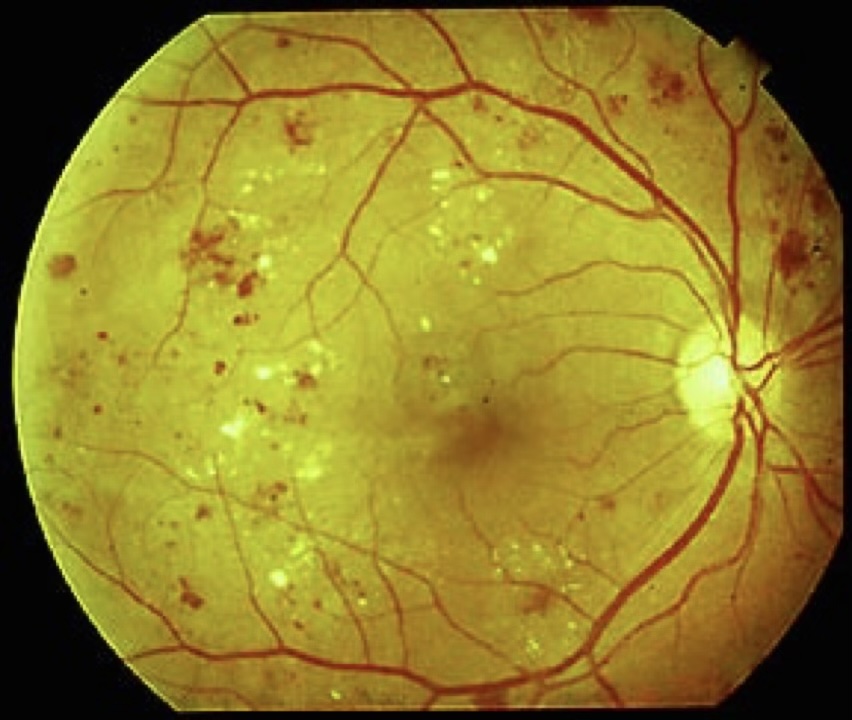
Chronically elevated blood glucose damages the small blood vessels throughout the body — and the retina, with its extraordinary density of microvasculature, is particularly vulnerable. Over time, retinal capillaries become leaky, develop abnormal outpouchings (microaneurysms), and in more advanced disease, close off entirely. The resulting ischaemia drives the growth of new, fragile blood vessels — a process called neovascularisation — which are prone to bleeding and to forming fibrous membranes on the retinal surface.

The two principal threats to vision in diabetic eye disease are diabetic macular oedema — fluid accumulation at the centre of the retina — and the complications of proliferative diabetic retinopathy, including vitreous haemorrhage and tractional retinal detachment.

Diabetic Macular Oedema (DMO)

The macula is responsible for all central, detailed vision — reading, recognising faces, driving. When leaking retinal vessels cause fluid to accumulate within the macular layers, central vision becomes blurred, distorted, and progressively impaired. Diabetic macular oedema is the most common cause of visual impairment in people with diabetes, and its impact on daily life can be profound.

Diagnosis and Monitoring

DMO is diagnosed and monitored using optical coherence tomography (OCT), which provides detailed cross-sectional imaging of the retinal layers and allows precise measurement of retinal thickness and the location of fluid relative to the fovea. Fluorescein angiography may be used to map the pattern of leakage and identify treatable microaneurysms.

Anti-VEGF Injections

Intravitreal anti-VEGF (anti-vascular endothelial growth factor) injections are the mainstay of treatment for centre-involving DMO. By blocking the VEGF protein that drives both vascular leakage and neovascularisation, these injections reduce macular oedema and, in many patients, improve visual acuity significantly. Treatment typically involves a loading phase of monthly injections followed by a maintenance phase guided by the OCT response.

In my private practice, I follow evidence-based treatment criteria but with an important nuance: I am prepared to intervene and begin injections earlier than standard thresholds when OCT shows oedema beginning to encroach on the fovea, even if visual acuity remains good at that point. The rationale is straightforward — it is considerably easier to prevent foveal damage than to reverse it once it has occurred. Protecting the fovea before visual loss begins offers the best chance of maintaining excellent long-term vision.

Steroid Implants

For patients in whom anti-VEGF injections have not produced an adequate response, or in whom the injection burden is difficult to sustain, intravitreal steroid implants offer an important alternative. The dexamethasone implant (Ozurdex) is a biodegradable implant injected into the vitreous cavity that releases steroid slowly over several months, reducing macular inflammation and oedema. It is particularly useful in patients with chronic DMO, pseudophakic patients (those who have had cataract surgery), and in certain patterns of oedema that respond less well to anti-VEGF therapy. The main considerations are a tendency to raise intraocular pressure and to accelerate cataract formation in patients who retain their natural lens — both of which are manageable and monitored.

Laser Treatment

Focal and grid laser photocoagulation to leaking microaneurysms and areas of retinal thickening has a more limited role in the era of anti-VEGF therapy but remains relevant in selected cases — particularly for non-central oedema where the fovea is not threatened and treatment burden needs to be minimised.

Proliferative Diabetic Retinopathy (PDR)

Proliferative diabetic retinopathy arises when widespread retinal ischaemia drives the growth of new blood vessels on the retinal surface and into the vitreous cavity. Understanding what happens next explains why this stage of the disease is so dangerous.

The ischaemic retina releases VEGF as a distress signal, and new vessels follow these VEGF gradients as they grow — not along the retinal surface, but up into the vitreous cavity, tracking the collagen scaffold of the vitreous gel. These new vessels are fragile, disorganised, and lack the structural integrity of normal retinal vasculature. When they bleed — which they do readily — blood disperses through the vitreous, causing the sudden visual loss of vitreous haemorrhage described below.

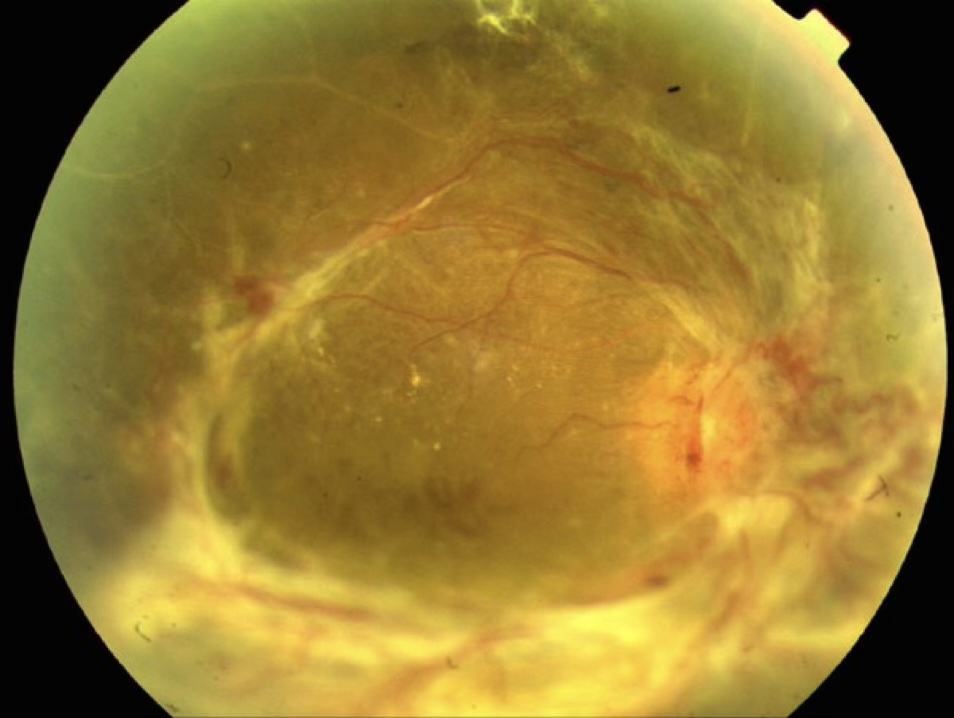
But bleeding is only part of the problem. Blood in the vitreous triggers contraction of the vitreous collagen fibres — the same process that occurs in scar tissue formation elsewhere in the body. The new vessels are anchored at one end in the retina and extend into the vitreous, so as the collagen contracts around them, they act like guy ropes on a tent — pulling on their retinal attachment points, elevating and distorting the retina beneath. As this fibrovascular scaffolding matures and tightens, it can lift the retina progressively away from the eye wall, producing a tractional retinal detachment. If the traction also tears the retina, a combined tractional-rhegmatogenous detachment results — the most complex and surgically demanding consequence of proliferative diabetic eye disease.

Panretinal Photocoagulation (PRP)

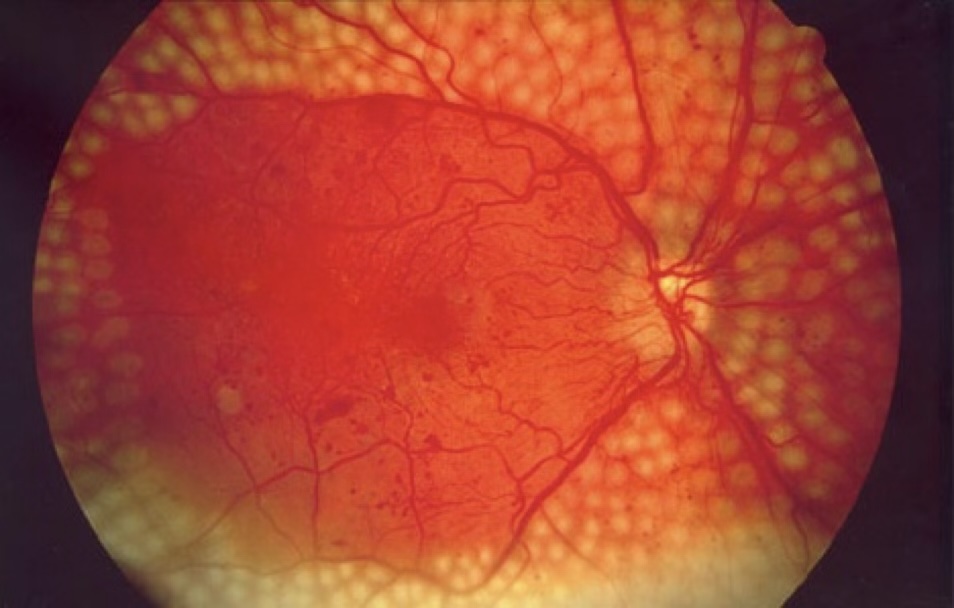
Panretinal laser photocoagulation remains a cornerstone of treatment for proliferative diabetic retinopathy. By ablating ischaemic peripheral retina, PRP reduces the stimulus for new vessel growth and causes existing neovascularisation to regress. It is typically delivered over one or two sessions and can be combined with anti-VEGF injection for a more rapid initial response. PRP does not restore vision that has already been lost but is highly effective at preventing the sight-threatening complications of untreated proliferative disease.

Anti-VEGF for PDR

Anti-VEGF injections have an important adjunctive role in proliferative diabetic retinopathy, causing rapid regression of new vessels and reducing the risk of haemorrhage. They are used alongside PRP in many cases and have a specific and important role in the surgical management of advanced disease — as described below.

Vitreous Haemorrhage

When new vessels bleed into the vitreous cavity, the result is a sudden and often dramatic loss of vision — from blurring and floaters to near-complete loss of the visual field, depending on the volume of blood. In the NHS setting, an initial period of observation is standard practice, allowing time for spontaneous clearance of the haemorrhage. In private practice, however, most patients are understandably unwilling to wait weeks or months with severely impaired vision when an effective surgical solution is available.

For a fundus-obscuring vitreous haemorrhage — one dense enough to prevent adequate examination and assessment of the underlying retina — I offer early vitrectomy combined with intravitreal anti-VEGF injection . The vitrectomy clears the blood and allows direct treatment of the underlying proliferative disease — laser, membrane treatment, or whatever is required — while the anti-VEGF injection addresses active neovascularisation. This combined approach restores vision rapidly, allows comprehensive treatment of the underlying disease in a single procedure, and avoids the prolonged uncertainty of watchful waiting.

Tractional Retinal Detachment

As fibrovascular membranes on the retinal surface mature and contract, they exert traction on the underlying retina. When this traction is sufficient to pull the retina away from the eye wall, a tractional retinal detachment develops. If the macula remains attached, there may be surprisingly good central vision despite the detachment — but the threat to central vision is real and progressive, and surgical intervention is required.

Tractional retinal detachment surgery is among the most technically demanding operations in vitreoretinal surgery. The goal is to remove the vitreous, carefully dissect and remove or segment the fibrovascular membranes from the retinal surface — a process called delamination — and allow the retina to reattach. The retina in advanced diabetic eye disease is often ischaemic, fragile, and adherent to the overlying membranes, making dissection painstaking and the risk of iatrogenic retinal breaks real.

Pre-operative Anti-VEGF Injection

An important part of my approach to surgical planning for tractional detachment is the use of pre-operative anti-VEGF injection, administered a few days before the planned vitrectomy . This causes regression of active neovascularisation and reduces the vascularity of the fibrovascular membranes, making them easier and safer to dissect and substantially reducing intraoperative bleeding. This is particularly valuable when the membranes are still highly vascular — before the so-called angiofibrotic switch, the point at which active vessels regress and the membrane becomes predominantly fibrous. At that stage, pre-treatment makes the most significant difference to surgical safety and outcomes. Once the angiofibrotic switch has occurred and membranes are largely avascular, the benefit of pre-treatment is less pronounced, though it is still considered on a case-by-case basis.

Combined Tractional-Rhegmatogenous Detachment

When traction tears the retina as well as detaching it, a combined tractional-rhegmatogenous retinal detachment results. This is a more serious situation than pure tractional detachment — the rhegmatogenous component allows fluid to pass through the retinal break and accumulate beneath the retina more rapidly, and the surgical repair must address both the traction and the break. Gas or silicone oil tamponade is typically required, and the surgical complexity is correspondingly greater. These cases require careful preoperative planning and experienced surgical judgement.

The Importance of Early Referral

The most important message in diabetic eye disease is that the best outcomes are achieved by treating early — before vision has deteriorated significantly. By the time a patient notices visual symptoms, damage has often already occurred at the fovea that cannot be fully reversed. Regular monitoring, prompt escalation when signs of progression appear, and low-threshold referral to a specialist when the situation warrants it are the principles that preserve vision in diabetic patients over the long term.

For referring clinicians: I am happy to see patients with diabetic eye disease at any stage of complexity — from difficult-to-manage DMO not responding to standard treatment, to advanced proliferative disease requiring surgical planning. Please contact Alison Anscombe to discuss a patient or arrange an urgent assessment.

Private Treatment in London

Medical treatment (anti-VEGF injections, Ozurdex, laser) and surgical management of diabetic eye disease are currently available privately at Moorfields Eye Hospital . From September 2026, the majority of my adult private practice — including diabetic vitreoretinal surgery — will move to 1 Welbeck, Marylebone , which will become my principal private surgical centre.

Book a Consultation

To discuss diabetic eye disease or arrange an assessment, please contact my secretary Alison Anscombe:

📞 +44 7974 015691  |  📧 [email protected]

Or use the contact form on this website .

Mr Robert Henderson BSc MBBS MD FRCOphth is a Consultant Vitreoretinal Surgeon at Moorfields Eye Hospital and Great Ormond Street Hospital, and Clinical Lead for Ophthalmology at GOSH